
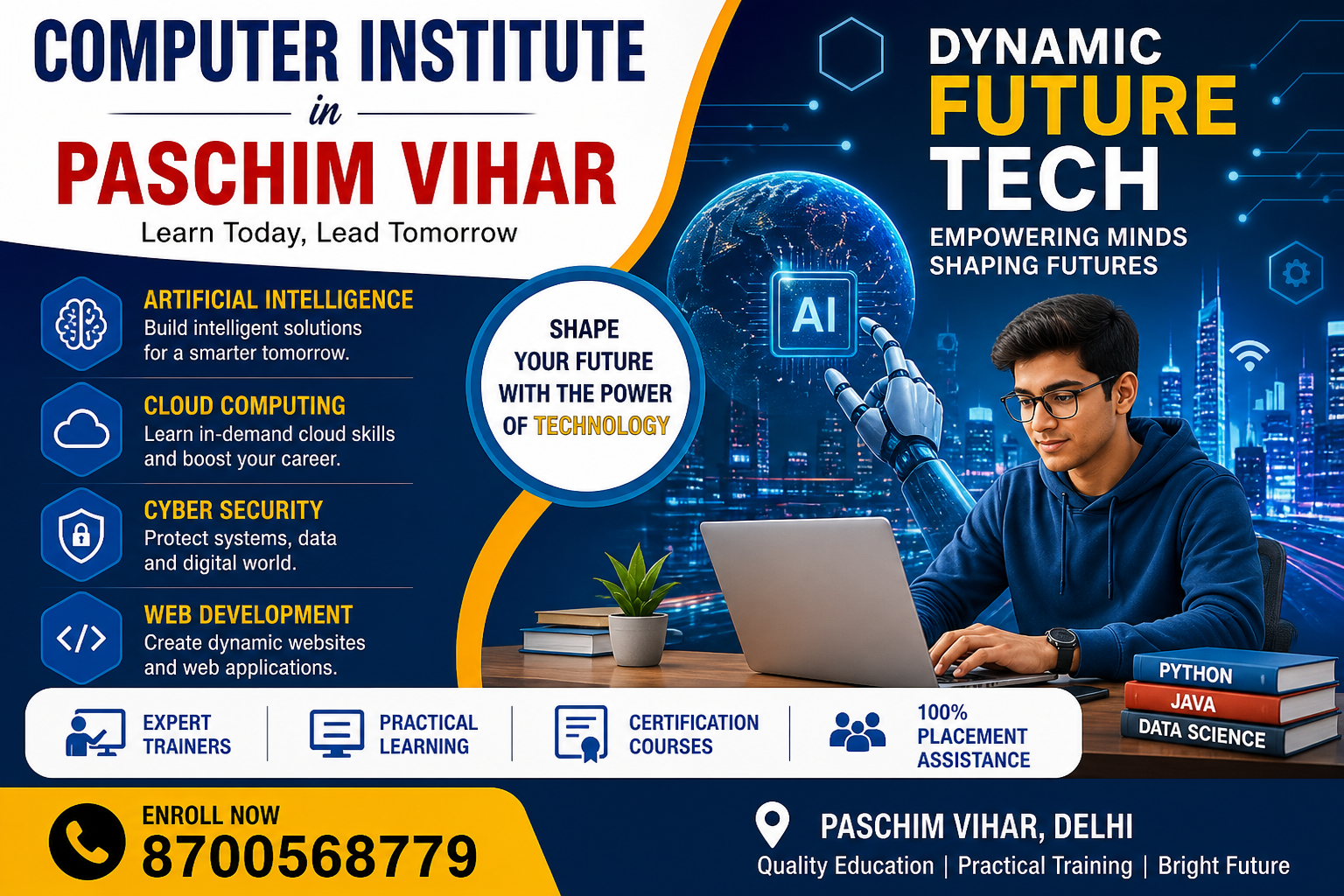
Dynamic Future Technology: A New Era of Innovation
By a Computer Institute in Paschim Vihar
Introduction
In today’s fast-changing digital world, technology is no longer static—it is dynamic, adaptive, and constantly evolving. The term dynamic future technology refers to innovations that are intelligent, flexible, and capable of transforming themselves according to changing needs. These technologies are shaping industries, redefining careers, and opening new opportunities for students and professionals alike.
As a leading computer institute, it is essential to understand these emerging trends and prepare learners to thrive in a technology-driven future.
The Rise of Artificial Intelligence
Artificial Intelligence (AI) is at the heart of dynamic future technology. Unlike traditional software, AI systems can learn, adapt, and make decisions with minimal human intervention.
Today, AI is used in:
- Voice assistants like Siri and Alexa
- Recommendation systems on streaming platforms
- Autonomous vehicles and smart navigation
- Fraud detection in banking systems
In the future, AI will become even more powerful, acting as a digital partner that assists humans in solving complex problems. Students learning programming and data science today will become the innovators of tomorrow.
Machine Learning and Data Science
Machine Learning (ML), a subset of AI, allows computers to learn from data without being explicitly programmed. With the explosion of data in the digital age, ML has become one of the most in-demand skills worldwide.
Dynamic future technology relies heavily on:
- Predictive analytics
- Data-driven decision-making
- Personalized user experiences
For example, e-commerce platforms analyze customer behavior to suggest products, while healthcare systems use data to predict diseases early. Learning data science today ensures a strong foundation for future careers.
Cloud Computing: The Backbone of Modern Technology
Cloud computing has revolutionized how businesses store and access data. Instead of relying on physical servers, organizations now use cloud platforms to operate efficiently.
Key benefits include:
- Scalability and flexibility
- Cost efficiency
- Remote accessibility
- Enhanced data security
With companies shifting to cloud-based solutions, skills in platforms like AWS, Microsoft Azure, and Google Cloud are becoming essential. Dynamic future technology depends on cloud infrastructure to function seamlessly.
Cybersecurity: Protecting the Digital World
As technology grows, so do cyber threats. Cybersecurity has become a critical component of dynamic future technology.
Some major areas include:
- Ethical hacking
- Network security
- Data protection
- Cyber law
With increasing digital transactions and online activities, the demand for cybersecurity professionals is rising rapidly. Students trained in this field will play a vital role in protecting sensitive information.
Internet of Things (IoT) and Smart Living
The Internet of Things (IoT) connects everyday devices to the internet, making them smarter and more efficient.
Examples of IoT include:
- Smart homes with automated lighting and security
- Wearable fitness devices
- Smart cities with traffic management systems
In the future, IoT will create a fully connected environment where devices communicate with each other to improve efficiency and convenience. Learning IoT technologies opens doors to innovative career paths.
Blockchain Technology and Digital Trust
Blockchain is another revolutionary technology shaping the future. It provides a secure and transparent way to record transactions.
Key applications include:
- Cryptocurrencies like Bitcoin
- Secure digital payments
- Supply chain management
- Digital identity verification
Blockchain ensures trust in digital systems, making it a crucial part of future technology ecosystems.
The Role of Programming Languages
To work with dynamic future technologies, programming skills are essential. Languages like:
- Python
- Java
- JavaScript
- C++
are widely used in AI, web development, and software engineering.
Students who master coding gain the ability to create applications, solve problems, and innovate. Programming is not just a skill—it is the foundation of all modern technology.
Career Opportunities in Future Technology
Dynamic future technology is creating a wide range of career opportunities, such as:
- AI Engineer
- Data Scientist
- Cloud Engineer
- Cybersecurity Analyst
- Software Developer
- IoT Specialist
These careers offer high growth potential, competitive salaries, and global opportunities. A strong technical education can help students achieve success in these fields.
Importance of Skill-Based Learning
Traditional education alone is not enough in today’s competitive world. Practical, skill-based learning is essential to keep up with technological advancements.
A good computer institute focuses on:
- Hands-on training
- Real-world projects
- Industry-relevant curriculum
- Placement support
Students who gain practical experience are better prepared for job roles and industry challenges.
Preparing for the Future
The future belongs to those who are ready to adapt and learn continuously. Dynamic future technology is not limited to experts—it is accessible to anyone willing to learn.
To succeed, students should:
- Stay updated with latest trends
- Practice coding regularly
- Work on projects
- Build problem-solving skills
Learning today ensures success tomorrow.
Conclusion
Dynamic future technology is transforming the world at an incredible pace. From artificial intelligence to cloud computing and cybersecurity, these innovations are shaping every aspect of our lives.
For students and professionals, this is the perfect time to invest in technical skills and build a strong career in the IT industry. A computer institute in Paschim Vihar can serve as the starting point for this journey, providing the right guidance, training, and opportunities.
The future is dynamic, and those who embrace technology today will lead the world tomorrow.